Protecting embroidered goods during transit with cast stretch film and water soluble embroidery film

Introduction
Here’s the thing: embroidered garments need two kinds of protection. One layer preserves the stitches and delicate trims. Another layer secures the packaged units for shipment. Use the right combination and you avoid thread pulls, flattening, and unhappy customers.
This article explains how to use cast stretch film and water soluble film for embroidery together in the production and shipping flow. You’ll get practical steps, storage tips, and testing advice so the change actually lowers damage rates.
Why embroidery deserves special packaging
Embroidery raises the surface and adds texture. Metallic threads, dense fills, and appliqués can catch or flatten in handling. That means a packing choice that’s safe for a plain tee won’t necessarily protect an embroidered jacket.
So you need a thin protective skin that won’t leave residue and a more robust outer containment for transport.
What water soluble film for embroidery does
Water soluble film for embroidery acts like a temporary skin placed directly over stitched surfaces. It reduces friction, prevents needle-through errors, and dissolves cleanly in water when removal is required.
Apply this film right after finished inspection to protect the look and the hand of the garment. It’s especially useful where downstream processes or customers expect residue-free results.
How cast stretch film secures shipments
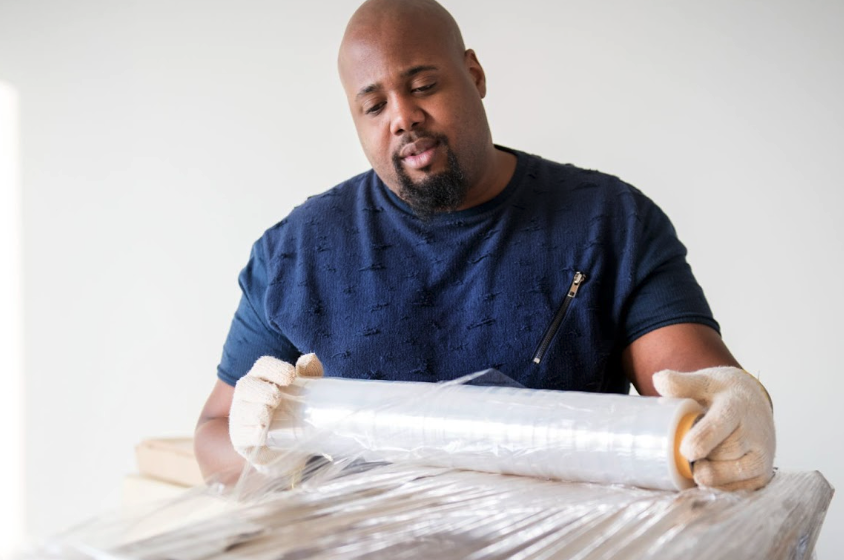
Cast stretch film is the workhorse for pallets. It provides uniform thickness, predictable machine behavior, and strong adhesion to keep boxes or bags stable in transit.
When used as the pallet wrap, cast stretch film resists tearing and keeps labels readable through the film. It’s the reliable outer layer that makes sure your carefully protected garments arrive intact.
A practical workflow that protects both stitch and shipment
Apply the water soluble film for embroidery immediately after finishing and inspection. Smooth it over the stitched area so threads sit flat. Fold or bag the garment, then stage the boxed units on the pallet.
Wrap the pallet with cast stretch film using normal machine settings. The soluble film stays inside the package and does the work at the surface, while the cast film does the heavy lifting for transport.
Storage and handling to avoid problems
Store the water soluble film in a dry place. High humidity shortens its usable life and can make it soft. Keep rolls sealed and apply the film as late as possible to avoid premature exposure.
Cast stretch film is more tolerant but still benefits from controlled storage to keep its pre-stretch behavior consistent. Train operators on smooth application of the soluble film, wrinkles create pressure points that show through fabric.
Testing steps before you scale
Do a pilot run with representative SKUs. Protect garments with the soluble film, bag them, and palletize. Run handling simulations and inspect stitches after simulated transit. Do a small dissolution test so you can prove the film disappears cleanly and leaves no residue.
Measure damage rates before and after the trial and track any changes in throughput.
Why this reduces returns and rework
Protecting embroidery at the surface removes many of the common causes of aesthetic damage. When stitches arrive undisturbed, customer complaints fall. The cast film prevents movement at scale. Together they reduce rework and returns, savings that usually justify the slight material premium.
Conclusion
If embroidery quality matters, protect the surface first with water soluble film for embroidery and then secure the pallet with cast stretch film. Apply the soluble film at the finishing station, store it dry, and use the machine film for pallet-level stability. Test with real SKUs and you’ll cut damage, save time, and keep your products looking as intended.